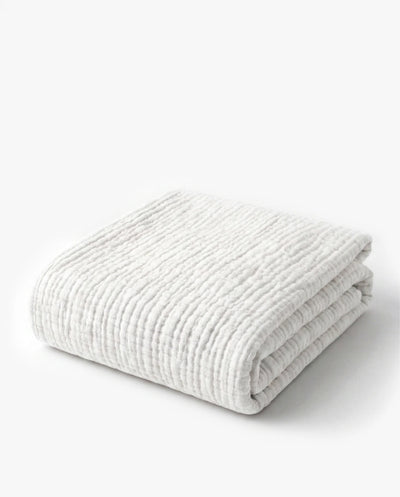
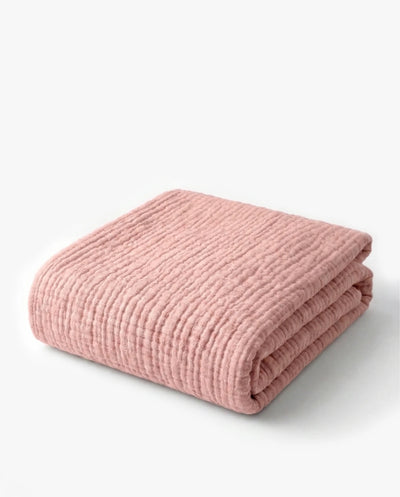
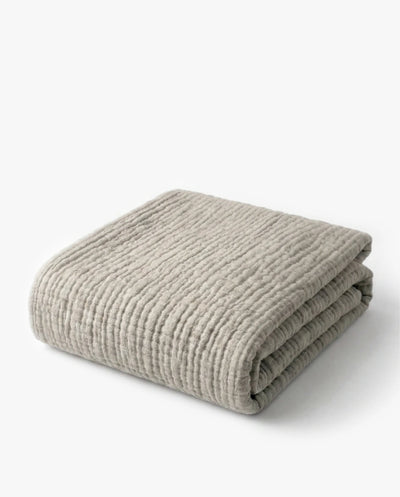
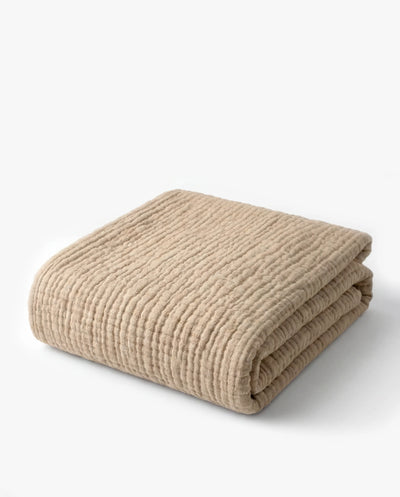
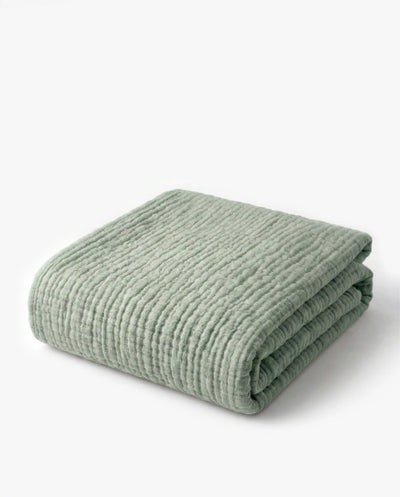
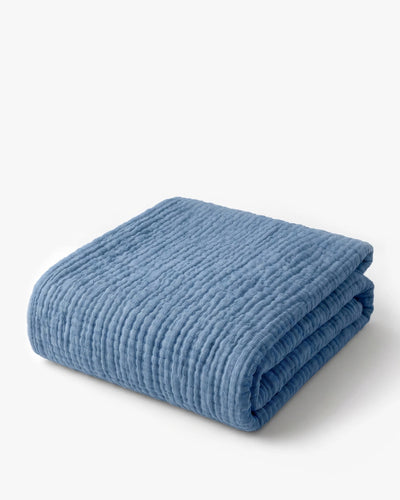


Choosing the right blanket matters when you have sensitive skin. Bedding stays in close contact with your skin for hours, so rough textures, excessive heat, trapped moisture, or irritating finishes can make your sleeping environment less comfortable.
So, is muslin good for sensitive skin? In most cases, yes. Cotton muslin is lightweight, soft, breathable, and comfortable against the skin. These qualities make it a popular choice for people who prefer gentle, breathable bedding.
A muslin cotton blanket can be an excellent option for people who want comfortable coverage without the heavy or warm feeling of thicker blankets. In this guide, we'll explain why muslin can be a good choice for sensitive skin, what to look for when buying one, and how to care for your blanket.
What Is Muslin?
Muslin is a lightweight woven fabric traditionally made from cotton. Its airy construction gives it a soft, breathable feel while keeping the blanket relatively lightweight. Unlike thick winter bedding, muslin doesn't need to feel bulky to provide comfortable coverage.
This makes it particularly useful for warm sleepers, summer bedding, and people who prefer a lighter layer at night. When shopping for muslin bedding, always check the product label to confirm the fiber composition. "Muslin" describes the fabric construction, while the actual fiber can vary.
Why Is Muslin Good for Sensitive Skin?
The main reason cotton muslin works well for sensitive skin is its combination of softness and breathability.
1. Soft Against the Skin
Sensitive skin can be more uncomfortable when exposed to rough or scratchy fabrics. Cotton is generally soft and comfortable, making it a popular material for clothing and bedding. The texture of a good-quality muslin cotton blanket can provide comfortable coverage without feeling heavy or abrasive.
2. Breathable and Lightweight
Heat and sweating can make sensitive skin feel uncomfortable. A breathable blanket allows better airflow and can help create a more comfortable sleeping environment. That's one reason lightweight bedding can be a smart choice for people who tend to sleep warm.
3. Helps Manage Moisture
Cotton naturally absorbs moisture, which can make it more comfortable than fabrics that feel hot or clammy against the skin. A lightweight muslin blanket can provide comfortable coverage without adding unnecessary layers or bulk.
4. Easy to Wash
Bedding needs regular cleaning, especially when it is in direct contact with your skin. Cotton bedding is generally easy to wash and maintain. A blanket that can be regularly cleaned is a practical choice for everyday use. Always follow the specific washing instructions provided with your blanket.
Is a Muslin Cotton Blanket Good for Eczema?
A muslin cotton blanket may be a comfortable bedding choice for someone with eczema, particularly when the blanket is made from soft cotton and doesn't contain irritating finishes or rough components. Cotton is commonly preferred for sensitive skin because of its softness and breathability.
However, everyone's skin is different. A blanket that feels comfortable for one person may not work for another. If you have diagnosed eczema or another skin condition, follow the advice of your healthcare professional and choose bedding that works well for your individual needs.
What Should You Look for in a Blanket for Sensitive Skin?
Choosing the right material is only part of the decision. Pay attention to the complete product.
Choose Soft, Natural Fibers
If sensitive skin is your priority, look for breathable fabrics such as cotton. Check the fiber content instead of relying only on terms such as "cotton-rich." A higher cotton content can be useful because some blends contain significant amounts of synthetic fibers.
Look for Breathability
A lightweight, airy blanket is often preferable if you tend to overheat at night. Breathability can help reduce the uncomfortable combination of heat and sweating that may make sensitive skin feel uncomfortable.
Avoid Rough Textures
Before buying, consider how the fabric feels. Rough or scratchy surfaces can be uncomfortable, particularly when the blanket is used directly against the skin.
Consider the Blanket's Construction
Look at the stitching, edges, layers, and overall finish. A soft fabric can still feel uncomfortable if the blanket has rough seams or poorly finished edges.
Check the Care Instructions
Choose a blanket that you can wash regularly without complicated maintenance. Clean bedding is an important part of a comfortable sleep environment.
Muslin vs. Fleece for Sensitive Skin
Both muslin and fleece can be soft, but they serve different purposes.
A fleece blanket is generally chosen when warmth and plush comfort are the priority. Muslin cotton is better suited to people who prioritize lightweight coverage, airflow, and a cooler sleeping environment.
If you're looking for winter warmth, you may prefer fleece. For warm weather or hot sleepers, a breathable muslin cotton blanket can be a more suitable choice.
If you're looking for a warm option for colder months, check out Best Fleece Blankets to Buy for Winter (Top Picks).

Is Muslin Good for Hot Sleepers?
Yes, cotton muslin can be particularly appealing to hot sleepers because it is lightweight and breathable. Instead of using a thick blanket that retains a lot of warmth, you can use a muslin blanket as a comfortable lightweight layer.
If staying cool at night is your main concern, our guide Best Blankets for Hot Sleepers (Stay Cool All Night) covers more options for choosing breathable bedding.
How to Care for a Muslin Cotton Blanket
Proper washing and care can help maintain the blanket's softness and overall condition.
Follow the manufacturer's care label, and consider these general tips:
- Wash according to the recommended temperature.
- Use a gentle detergent if appropriate for your skin.
- Avoid heavily fragranced laundry products if they irritate your skin.
- Rinse thoroughly.
- Don't overload the washing machine.
- Dry according to the manufacturer's instructions.
- Store the blanket in a clean, dry place.
Regular care can help preserve the softness and breathability of cotton fabrics.
Why Choose The Cotton Living?
At The Cotton Living, we understand that comfort starts with choosing the right fabric. Our focus is on blankets that combine softness, practical everyday use, and comfortable designs. For shoppers looking for lightweight bedding, a muslin cotton blanket can be a versatile choice for bedrooms, guest rooms, children's spaces, and warm-weather use.
Rather than choosing a blanket based only on appearance, consider how the material feels against your skin, how breathable it is, and how easy it will be to wash and maintain.
Final Thoughts
So, is muslin good for sensitive skin? For many people, cotton muslin is an excellent bedding choice because it combines softness, breathability, lightweight comfort, and easy care. A muslin cotton blanket can be particularly useful if you sleep warm, prefer lightweight bedding, or want a breathable blanket for everyday use. At The Cotton Living, choosing the right blanket starts with choosing materials that feel comfortable in everyday life. If softness and breathability are your priorities, muslin cotton is certainly worth considering.
Frequently Asked Questions
Is muslin good for sensitive skin?
Yes. Cotton muslin is generally a soft and breathable fabric, making it a comfortable option for people who prefer gentle bedding.
Is a muslin cotton blanket good for eczema?
It can be a comfortable option because cotton is soft, breathable, absorbent, and washable. However, individual skin sensitivities vary, so choose products carefully and follow medical advice when needed.
Does muslin keep you cool?
Muslin cotton is lightweight and breathable, making it well suited to warm weather and people who prefer cooler bedding.
Is muslin better than fleece for summer?
Generally, yes. Muslin cotton is lighter and more breathable, while fleece is primarily designed to provide warmth.
Can babies use muslin blankets?
Muslin is widely used in baby products, but safe sleep practices are especially important for infants. Parents should follow current guidance from their pediatrician or relevant child-safety authority rather than choosing bedding based solely on fabric type.


