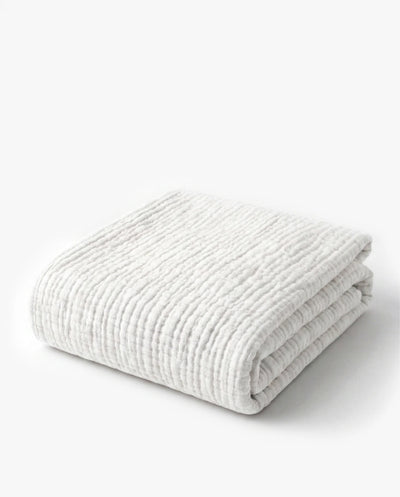
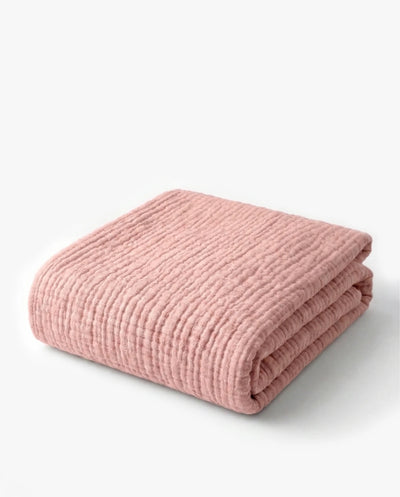
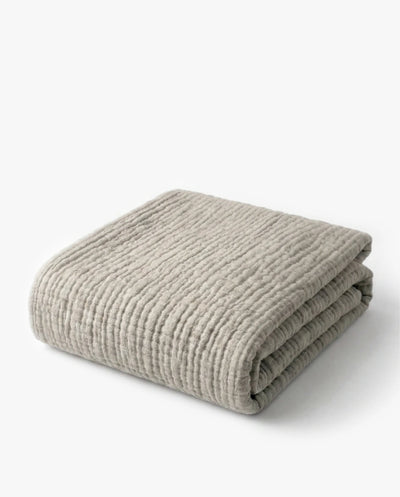
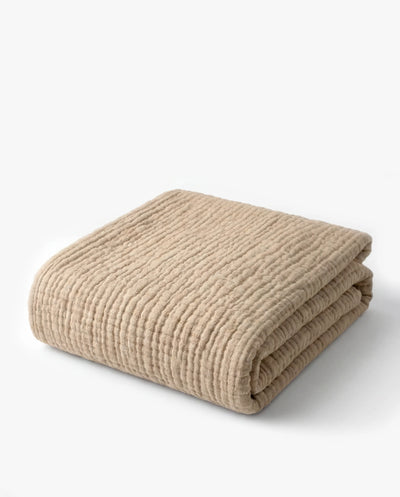
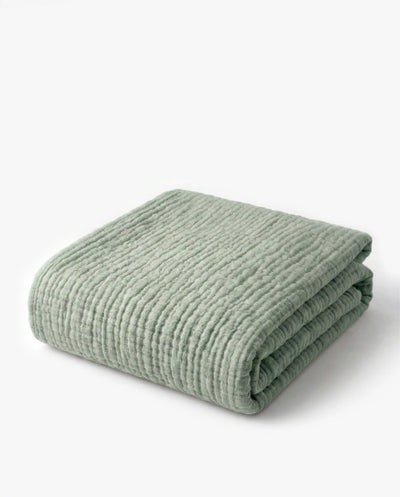
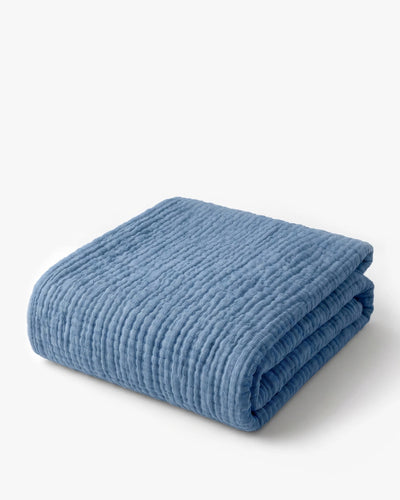


Hot and humid weather can make sleeping uncomfortable, especially when your blanket feels heavy, traps heat, or leaves you feeling sweaty during the night. The right blanket should provide enough comfort to cover you without overheating you.
That is where a lightweight muslin blanket can be a practical choice.
Muslin is a lightweight cotton fabric known for its airy construction and soft feel. Cotton is widely used for warm-weather bedding because it allows airflow and can absorb moisture, while lightweight and more open constructions generally feel less stuffy than heavy blankets.
If you're shopping for the best muslin blanket for hot and humid weather, this guide will help you understand what to look for, which features matter, and how to choose one for your sleeping habits.
Why Choose a Muslin Blanket for Hot and Humid Weather?
When temperatures rise, a thick blanket can quickly become uncomfortable. You may want some coverage while sleeping, but you don't necessarily need a heavy layer that holds in excess warmth.
Muslin offers a different approach.
A lightweight cotton muslin blanket can provide:
- Breathable coverage
- A soft feel against the skin
- Lightweight comfort
- Better airflow than many heavy blanket constructions
- Moisture absorption from cotton
- Easy everyday use
- A comfortable layer for warm nights
Cotton is considered one of the more suitable materials for summer bedding because it is breathable and can absorb moisture, helping reduce the clammy feeling that some sleepers experience in warm conditions.
What Makes a Muslin Blanket Good for Humid Weather?
Not every muslin blanket will feel exactly the same.
When shopping for one for a warm or humid climate, pay attention to more than just the word "muslin."
Lightweight Construction
A lightweight blanket is usually more comfortable when temperatures are high.
You want enough fabric to provide comfortable coverage without creating unnecessary warmth. A very thick or heavily layered blanket may defeat the purpose of choosing muslin in the first place.
Breathable Cotton Fabric
The fabric itself matters.
Cotton is naturally breathable and can absorb moisture, which makes it a common choice for warm-weather bedding.
If staying cool is your priority, look for muslin made primarily from cotton rather than choosing based only on appearance or softness.
Airy Weave
The construction of the fabric also influences how it feels.
A more open or airy structure can allow greater airflow around the body. Sleep Foundation notes that looser weaves generally feel cooler because they allow more ventilation.
Softness
Hot weather often means more direct contact between your skin and the blanket.
A rough or stiff blanket can become uncomfortable quickly, especially if you move around during sleep. A soft muslin blanket can provide coverage without feeling overly heavy against the body.
Best Muslin Blanket Features to Look For
If you're comparing different muslin blankets, focus on these features:
- 100% cotton: A natural cotton construction is a strong choice for warm-weather comfort.
- Lightweight feel: Look for a blanket designed for breathable coverage rather than heavy insulation.
- Airy construction: A breathable weave can help improve ventilation.
- Soft texture: This matters when the blanket sits directly against your skin.
- Machine-washable care: Warm-weather blankets may need more frequent washing, so easy care is useful.
- Suitable size: Choose a size that gives you enough coverage without unnecessary bulk.
Is Muslin Good for Hot and Humid Nights?
Yes, a lightweight cotton muslin blanket can be a good option for hot and humid nights.
The key is choosing the right construction.
Muslin itself isn't a guarantee that you'll stay cool. A very thick, heavily layered, or oversized muslin blanket can still feel warmer than you want.
For humid weather, look for a muslin blanket that combines lightweight construction, breathable cotton, and an airy feel.
This is particularly useful for people who like sleeping under a blanket even when the weather is warm.
Muslin vs Heavy Blankets for Humid Weather
Heavy blankets are designed to provide insulation, which can be useful during cold weather but less comfortable during hot nights.
Muslin takes a different approach by providing a lighter layer.
For example, fleece is popular for cold-weather comfort because it is warm and cozy, but its synthetic construction can have less airflow than breathable natural fabrics.
For humid summer nights, a lightweight muslin blanket can therefore make more sense when your priority is coverage without excessive warmth.
How Many Layers Should a Muslin Blanket Have?
Layer count is worth considering when buying a muslin blanket.
More layers don't automatically mean a better blanket. Additional layers can increase thickness, weight, and warmth.
For hot and humid weather, you generally want a construction that remains lightweight and breathable.
If you are a particularly hot sleeper, a simpler lightweight muslin blanket may be more comfortable than a heavily layered design.
On the other hand, a slightly thicker muslin blanket can work well if your bedroom becomes cooler at night or if you use air conditioning.
Best Muslin Blanket for Hot Sleepers
If you tend to wake up feeling hot or sweaty, your blanket choice becomes especially important.
Instead of looking for the thickest or plushest option, focus on:
- Lightweight cotton
- Breathable construction
- Airflow
- Moisture absorption
- Softness
- Minimal insulation
The goal isn't to eliminate warmth completely. It's to find a balance where the blanket gives you comfortable coverage without making you feel trapped underneath it.
For more ideas, you can also read our guide to Best Blankets for Hot Sleepers.

Muslin Blanket for Summer
Summer is one of the most practical times to use a muslin blanket.
During warm months, many people don't want to sleep completely uncovered, but traditional blankets can feel excessive.
A lightweight muslin blanket can provide that middle ground.
You can use it:
- On your bed
- Over a flat sheet
- As a lightweight summer layer
- On the sofa
- In a guest room
- While travelling
- In an air-conditioned bedroom
For more warm-weather options, check out Best Lightweight Blankets for Summer Nights.
What Size Muslin Blanket Should You Buy?
The best size depends on where you plan to use the blanket.
For a bed, choose a size that gives you enough width and length to stay covered while sleeping.
For a sofa or chair, you may prefer a smaller blanket that is easier to fold and store.
Before buying, consider:
- Mattress size
- Whether you're sleeping alone or sharing
- How much side coverage you prefer
- Whether you tuck the blanket
- Whether you want it for bed or lounging
A blanket doesn't have to be oversized to be comfortable. In hot weather, choosing a practical size can also help keep the overall blanket lightweight and manageable.
How to Care for a Muslin Blanket in Humid Weather
Warm and humid weather can mean more frequent washing, especially if you tend to sweat at night.
Always follow the care instructions provided with your specific blanket.
In general, avoid unnecessarily harsh washing methods and use the recommended water temperature and drying instructions.
Proper care can help maintain the softness and structure of the fabric over time.
If you're concerned about shrinkage, our guide Do Muslin Blankets Shrink After Washing? explains what to consider when washing and caring for muslin blankets.
Is Muslin Better Than Fleece for Hot Weather?
For hot weather, muslin and fleece are designed around very different comfort needs.
Fleece is generally associated with warmth and cozy cold-weather use, while lightweight cotton fabrics are commonly preferred for warmer conditions because of their breathability.
If your main priority is staying comfortable during hot or humid nights, a lightweight muslin blanket is worth considering.
If your priority is warmth during cold weather, fleece may be more appropriate.
The best choice ultimately depends on the climate, bedroom temperature, and how warm you naturally sleep.
Are Muslin Blankets Good for Year-Round Use?
They can be.
A lightweight muslin blanket may work throughout the year if you live in a warm climate or use it as a layering piece.
During hotter months, you can use it on its own. When temperatures drop, you can combine it with another blanket or bedding layer.
This flexibility is one reason lightweight cotton blankets can be useful beyond summer.
However, if you live somewhere with very cold winters, you'll probably want a warmer blanket for those colder months.
Who Should Consider a Muslin Blanket?
A muslin blanket can be particularly useful if you:
- Sleep hot
- Live in a warm or humid climate
- Prefer lightweight bedding
- Don't like heavy blankets
- Want breathable cotton bedding
- Prefer a soft blanket against your skin
- Want a versatile summer blanket
- Use air conditioning at night but still want light coverage
It can also be a useful option for anyone who simply prefers the feel of lightweight bedding.
How to Choose the Best Muslin Blanket for Your Climate
Before buying, ask yourself three simple questions.
How warm is your bedroom?
If your room stays hot throughout the night, prioritize lightweight construction and airflow.
Do you sleep hot?
If you regularly feel too warm under your current blanket, avoid unnecessarily thick or heavy designs.
Do you use air conditioning?
If your room becomes significantly cooler at night, you may want slightly more coverage than someone sleeping in a naturally warm room.
Your ideal muslin blanket should match your actual sleeping environment rather than simply being marketed as a "summer blanket."
Find the Right Muslin Blanket for Hot Weather
The best muslin blanket for hot and humid weather should give you comfortable coverage without unnecessary weight or heat.
Look for breathable cotton, lightweight construction, an airy feel, and soft texture. These features can make a noticeable difference when temperatures rise.
At The Cotton Living, choosing the right blanket is about matching comfort with the way you actually live and sleep. A lightweight muslin blanket can be an excellent everyday option when you want breathable coverage during warm weather.
If you're looking for a comfortable cotton option for summer and warm climates, explore our Muslin Cotton Blanket collection.
Frequently Asked Questions
Are muslin blankets good for hot weather?
Yes. Lightweight cotton muslin blankets can be well suited to hot weather because cotton is breathable and absorbs moisture, while an airy construction can promote airflow.
Is muslin good for humid weather?
A lightweight cotton muslin blanket can work well in humid weather because cotton can absorb moisture and breathable construction allows airflow. The specific weave, weight, and layering of the blanket still matter.
Does a muslin blanket keep you cool?
Muslin does not actively cool your body like a cooling technology product. Its benefit is that lightweight, breathable construction can reduce the heavy, stuffy feeling associated with some warmer blankets.
Is muslin better than fleece for summer?
For warm weather, lightweight muslin is generally more suitable when your priority is breathability and lower warmth. Fleece is typically used for warmth and cold-weather comfort.
How thick should a muslin blanket be for summer?
For hot weather, choose a lightweight construction rather than automatically selecting the thickest option. If you use air conditioning, you may prefer slightly more weight or layering.
Can I use a muslin blanket all year?
Yes. A muslin blanket can work year-round as a lightweight layer, particularly in warm climates. During colder weather, you can combine it with warmer bedding.
Is 100% cotton muslin good for hot sleepers?
100% cotton muslin can be a good option for hot sleepers because cotton is breathable and moisture-absorbent. The blanket's thickness and construction also influence how warm it feels.
How do I keep a muslin blanket fresh in humid weather?
Follow the manufacturer's washing instructions and make sure the blanket dries completely before storing or using it again. Avoid leaving damp bedding folded up, as humidity can make drying more difficult.
Final Thoughts
Hot and humid weather doesn't mean you have to sleep without a blanket.
The right muslin blanket can give you the coverage and softness you want while keeping the overall bedding lightweight and breathable. For the best experience, prioritize cotton construction, airflow, appropriate thickness, and a size that fits your sleeping style.
Choose a muslin blanket that works with your climate rather than against it, and you'll have a comfortable layer that's useful throughout warm-weather nights.


